A space for reflection

Category: Weekly Reflections

This is the category to apply to your weekly reflection posts from the course.

Teaching in 2040

Jim Morrison once sang the famous line: “the future’s uncertain and the end is always near” in one of The Doors’ most iconic songs Roadhouse Blues. I love this quote, and I often find myself thinking about it. In tech class, we were encouraged to imagine ourselves teaching in the year 2040. I’ll be honest: I have no idea what to expect when it comes to teaching in 2040. Will the climate crisis change the focus of lessons and courses? Will the climate crisis change the way students are taught (synchronously vs asynchronously?) Will technology be so advanced that it will mark the end of the current era of teaching and the current classroom design as we know it? While I ponder all these questions, my mind relates back to that Jim Morrison quote. Now, I don’t believe this Rockstar poet wrote this quote with the school systems in mind and the evolution of education in mind, but art, and by extension, lyrics, are up to interpretation, right? For the sake of my interpretation of this lyric, I’ll be analyzing how it relates to the theme of uncertainty and the end of an era in a classroom setting.

Screenshot taken by chegruns of Amazon Music: “Roadhouse Blues” by The Doors

The Future’s Uncertain…

The climate crisis gives me a lot of worry and fear and uncertainty with respect to the future. I cannot help but imagine this topic will have a major influence in a classroom setting. For one, I would imagine topics might be more cross-curricular in a way that relates courses to the climate crisis: data analysis and trends of climate change in math, ecological damage and its impact on the climate in biology, energy efficiency in chemistry/physics, and human impact on the climate crisis in socials studies, for example. Secondly, I expect there may be an expectation that people are doing their part to significantly reduce their carbon footprint, more so than ever. This may result in more asynchronous/remote learning (where students aren’t having to commute to school), more digital resources (e-books and online textbooks instead of printed copies), and overall different expectations in a school setting with respect to waste reduction and recycling. However, I still feel uncertainty with respect to this as it likely depends on the actual impacts of the climate crisis as they play out, as well as factors such as to which extent the climate crisis is considered a serious threat to our future.

…and the end is always near

We have witnessed the evolution of technology over the past few decades, and I think it would be an accurate prediction to say that based on the trends of technology advances that have occurred up to this point, it will be even more impactful in 2040. I foresee a future where basic classroom resources such as printed books, paper, and pencils may not be such obvious, typical elements as tablets and electronic reading resources become much more accessible and typical. I foresee a future where teaching may very well be conducted online, as technology advances to such an extent that the current classroom design could essentially be “mimicked” online. Will this mark “the end” of the era of classrooms, teaching practices, and general school design as we’ve always known it to be? Maybe not completely so by 2040, but I sense the end of this era will be near by then.
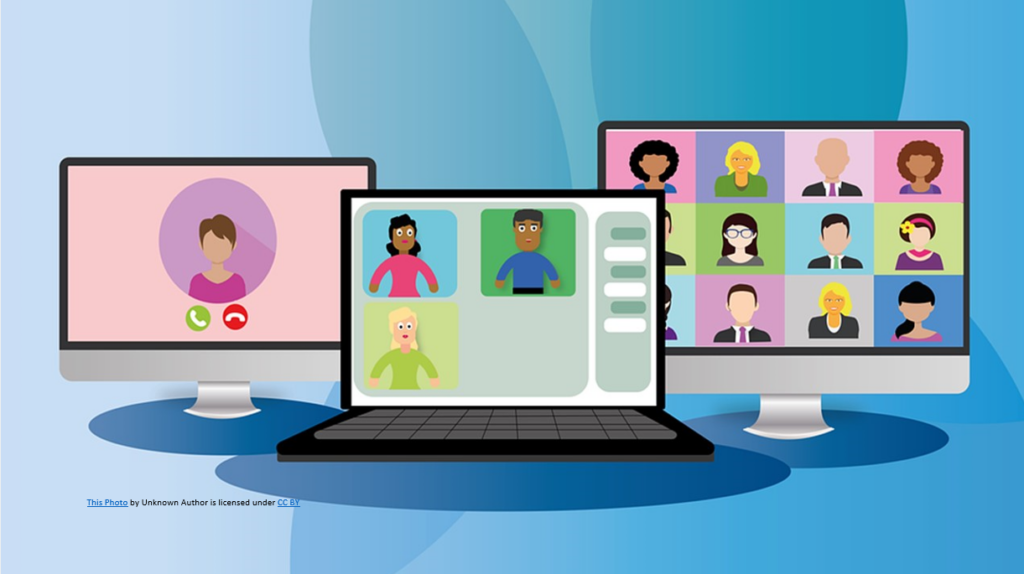
An online class. Screenshot taken by chegruns of photo from PowerPoint. Photo by unknown author is licensed under CC BY Creative Commons — Attribution 3.0 Unported — CC BY 3.0

Coding In the Classroom

In tech class, we discussed coding and how it can be integrated into the classroom. I am a math person, and often times people associate coding with mathematics, based on their common skills in logic, algorithmic design, and problem solving. However, for myself, to say that I developed competent skills in coding during my math degree would be a lie! I’m horrible at coding, and I don’t enjoy it at all. I do, however, believe it is an excellent resource, mode to represent your work, and tool to apply your learning in the math and science based classrooms. With a bit of motivation, I’m sure I could apply myself and learn to use it successfully and come to appreciate its implementation.

Despite my overall negative experience with coding during my undergraduate degree, I do have some memorable, somewhat positive takeaways to share.

RStudio for Statistics: In my statistics courses during my undergraduate degree, creating plot diagrams to support our data was a significant portion of coursework. Thankfully, there is a programming language called R which makes it pretty simple, even for non coding individuals, to create the plot diagrams instead of needing to do them by hand. During my undergraduate degree, I used RStudio to access the R programming language as it was organized and user friendly. Below is a video which describes why RStudio is a great option for R users:

Video from YouTube user MarinStatsLectures-R Programming & Statistics

Python’s Math Functions: During my undergraduate degree, I had to take a course on computer assisted mathematics and statistics. In this course, Python was the programming language used. This programming language made this course so much simpler because of Python’s math library! By typing something as simple as “import math” in the python console, you have access to all of the created math functions within the python language, without having to create them yourself! This is especially awesome when the goal of the course is not to be tested on the student’s ability to perform the math required for a given function (this should be done in other math courses), but rather to focus the questions on data analysis, and expose students to the different tools available to them to represent their work! Below is a video which describes how to use and access the math functions within Python!

Video from YouTube user Telusko which discusses how to use the math functions in Python

I hope that these options described above help students that don’t have the most positive relationship with coding learn to appreciate it a bit more and realize that there are ways to use it successfully and productively in their math and science based classes!

BC EdAccess

This week in class, we had Chantelle Morvay-Adams of BC EdAccess join our session. This was an incredibly valuable presentation and I felt like we learned a lot of important information about BC EdAccess as well as how to create an inclusive, accessible for all, classroom environment. Below is a video from https://bcedaccess.com/ which describes who they are and their initiative to create equitable learning opportunities for all students throughout BC classrooms:

I’m very grateful that Chantelle spoke with us and described the impactful work that occurs at BC EdAccess to advocate for equitable access to education for students with disabilities, and provide support for their families. Not only were we introduced to this incredible resource and organization, but it gave me the opportunity to reflect on my experience as a student, what I observed which may not have been supportive of all learners in the classrooms, and what I can do as a teacher to create an inclusive, comfortable learning environment which will best support all students in their educational journeys.

We discussed ways in which students are being excluded from class-activities and as a result losing valuable opportunities for learning when their teachers do not fully consider the needs of all students. For example, some students are being excluded from field trips and certain activities due to the absence of accessibility to support their participation. With this in mind, we discussed in small groups the actions and considerations that we should make as educators to ensure equitable access to learning and education for all. Some of the topics discussed by my group:

  1. Technology for accessibility: give access to technology which will support students during their learning and may be the difference between being able to participate in a classroom activity or not!
  2. My group discussed that technology for accessibility should be available as an option for all students to create an inclusive learning environment and break systemic barriers in the classroom. Not only will this provide students with another tool to support their learning/expose them to new technology to support learning in an alternative way, it will make everyone feel included and as though these technologies are not only for accessibility, but also awesome resources to support learning in general.

The Online Learning Environment

In class, we discussed the online learning environment: its benefits and its setbacks, synchronous versus asynchronous activities, and the various resources/platforms that are currently available for learning online. Below are my thoughts on a couple of online learning platforms through which I have found success as a student:

Brightspace

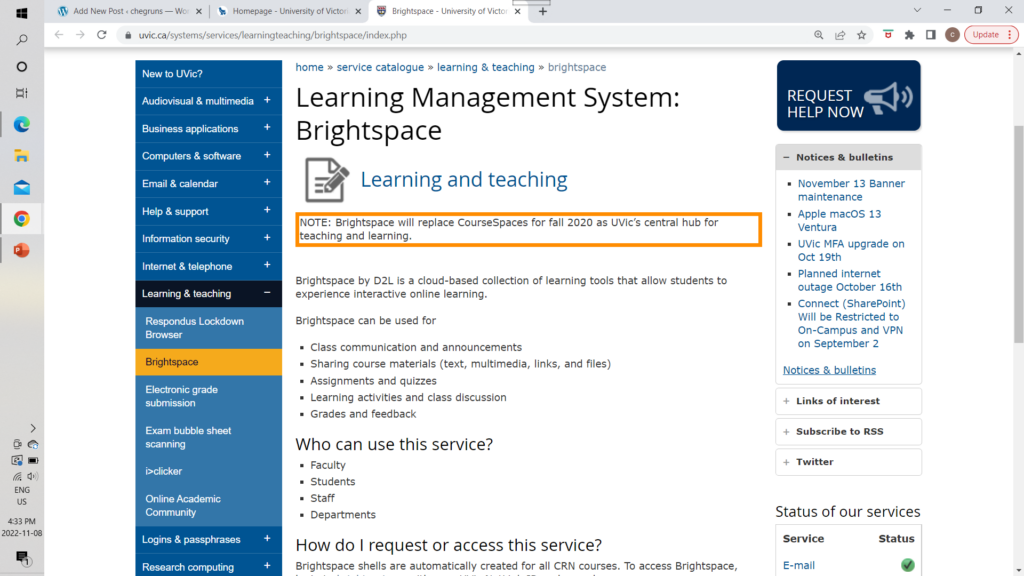
Brightspace – Screenshot of:
https://www.uvic.ca/systems/services/learningteaching/brightspace/index.php

Brightspace is a great online learning platform for teachers to upload resources for students to access online. As a student, I have used Brightspace for a couple of semesters of University coursework, and I have loved it! The first semester that I used Brightspace was when all learning was taking place online, as a result of the pandemic. Despite the challenges of jumping into an online learning environment, I felt like Brightspace made for a great alternative to in-person, completely synchronous learning. I appreciate having access to an online space for education where everything is together: resources for students, assignment drop boxes, etc.; I think it helps to make an organized learning environment! There are a few features to Brightspace that I enjoy using to make the learning feel more student-centered. For example, there is a space for class discussion in which students can share their ideas and engage in learning with each other and discussing the course content. Additionally, it is an easy platform through which to communicate with your instructor and classmates with the instant messages and email features.

Zoom

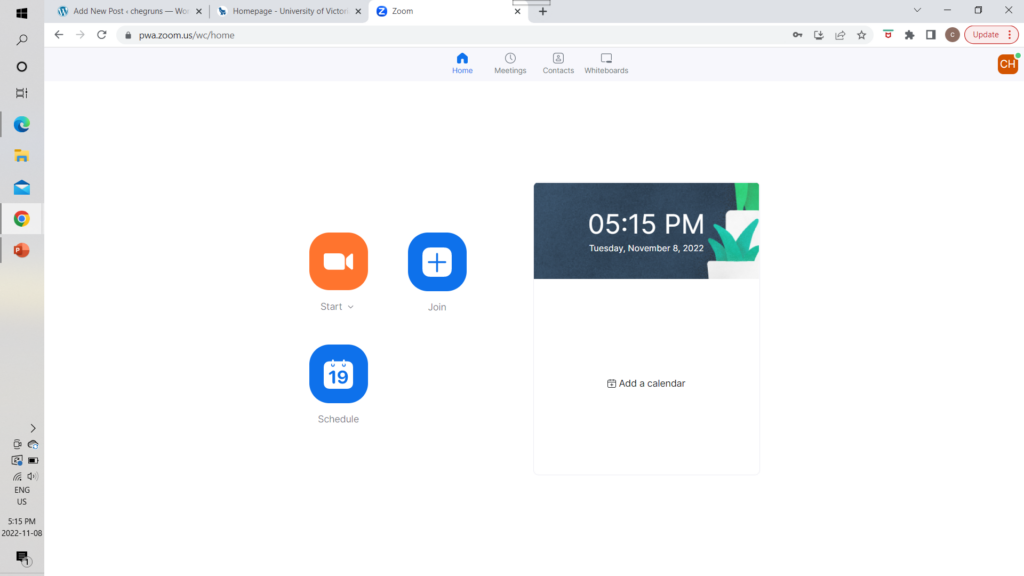
Zoom – Screenshot of: https://pwa.zoom.us/wc/

Zoom is an awesome way for online learning to occur in a synchronously. In most Zoom classes I’ve attended, the teacher is the host that is conducting the lecture to the students (the guests). Zoom is a great way to have everyone learning at the same time in the same virtual space; to that extent, it may increase accessibility for learning. As a student, I like how Zoom allows for continued learning when I am sick or unable to attend class. During the height of the pandemic, it was great to be able to simply log into Zoom from the comforts of my home environment and participate in class without the stress of getting sick or potentially making other students sick. I also appreciate the ability to avoid the commute and study from home synchronously; with the climate crisis, I want to be able to do what I can to minimize my carbon footprint, and not having to waste gas and release pollution into the air during a commute to school is a big plus for me! The only thing I don’t like about Zoom is that it feels a bit awkward and it can be intimidating to participate actively in an online lecture. However, the more Zoom sessions I attend, the easier it becomes!

Overall, I think that online learning is a great option and I think that as technology advances and our world evolves, the online learning environment becomes more effective and suitable for students. Currently, I appreciate a mixture of online and in-person learning opportunities, and as discussed in class, a mixture of synchronous and asynchronous activities. I think that as long as there is a good balance between teacher centered and student centered activities, and access is equitable, online learning is a viable approach to helping students learn, grow, and succeed in their educational journeys!

Multimedia Learning Theory and Image Editing

Figure 1: Aussie Shepherds in their element!

Imagine I was speaking to a group of students, or reading them a PowerPoint slide with nothing but text on it that said something like this:

“Picture a scene in a rural environment. It is an autumn day, and although the sky is full of grey clouds, it looks like the sun is trying to break through. In the background, there are colorful deciduous trees which border a field. In the field, there are two Australian Shepherds: one Black Tri Aussie Shepherd, and one Blue Merle Aussie Shepherd. There is a small herd of sheep behind them; the Aussies are truly in their element!”

Without a visual, it could possibly be difficult for some students to “picture” what is going on in the above description. What if they don’t know what an Australian Shepherd is? What if they don’t know what a deciduous tree is? There are some terms in the description which would require some prior knowledge (type of tree, breed of dog, etc.) for the students to fully understand it. An image to describe the scene would be beneficial to support the students that may not have the prior/specific knowledge! Not only would a visual aid be able to help students better understand the description, it may help them form definitions/descriptions for the terms they don’t know. In other words, the visual alongside the text increases the students learning/understanding of the description. This theory ties into the Multimedia Learning Hypothesis that a combination of text and images promotes deeper learning of a concept.

In class today, we discussed this concept of using text and images to better support students’ learning. For the most part, I agree with the statement. When I am new to a topic, I appreciate a mixture of visuals and text to increase my learning. For example, in a unit which introduces new vocabulary in a second language course, I benefit from visuals to help me define words without needing to translate them to English. I always find my understanding of a second language is best when I am able to understand the text visually in my mind rather than needing to first translate it in my mind in order to achieve a visual understanding of the text. However, once I am more familiar with something, or competent in a certain subject area, I personally don’t feel the need to have images to support my understanding of a written text because my deeper comprehension of a certain concept implies that I can visualize its meaning/significance in my mind. Hence, in my experience, I agree with the Multimedia Learning Hypothesis for the early stages of learning, but I don’t think it is absolutely necessary to represent content in a multimodal manner once I’ve achieved a certain level of understanding on a specific topic.

The image in Figure 1 represents the scene I described with the Australian Shepherds and sheep in the field lined by deciduous trees. I created this image using other images with PowerPoint. I never knew that PowerPoint was such a useful resource – it was so simple to create this image, and I am excited that I learned about the various uses of PowerPoint so that I can easily make my future lessons/presentations more multimodal!

Cellphones and Social Media Use in the Classroom

Cellphone use in the classroom is a difficult topic to address. I think there is a time and place for the use of mobile devices in the classroom. However, it is important that they are used appropriately and not in such a way that they are interfering  with a student’s performance and concentration during instructional periods. If the student is using it in a productive way to support their education, it can be a great tool. For example, in a language classroom, an online resource such as http://wordreference.com is really useful as it can allow students to look up words efficiently without needing to use a dictionary, giving students more time to focus on their learning. Similarly, having an account on http://www.duolingo.com is a great way for students to practice their language skills during work blocks, quiet time, or when they have finished their in class activities and want to continue learning. In the math/physics classroom, having access to a calculator on a cellphone is really convenient, as is being able to look up theorems through online resources to help with a student’s understanding of the concepts/enrich their learning. All of these resources can be easily accessed with a cellphone; I know that when I was a student, I benefited from using my phone during class time to access these programs!

I think that cellphone use can become a problem when students are distracted by the social aspect of it. Social media and text-messaging can become problematic in the classroom when they take away from the students’ focus. While I am sure social media can be used in an educative way, it may also be distracting and have a negative impact on a student’s learning. I think the key note here, as discussed during one of our tech ed classes, is that social media is not necessarily bad; what matters is how we chose to use it!

EdCamps: A Space for Teachers to Take Ownership of Their Learning

In class, we learned about EdCamps and we had the opportunity to participate in one ourselves. Here is a video that explains how they work and how to get the most out of your participation at an EdCamp:

EdCamps are a great opportunity for educators to come together and share their ideas about learning topics in an unformal setting. In my group’s EdCamp, our topic was on incorporating LGBTQ+ and BIPOC topics and literature in the classroom. It was a great way to learn from each-other, share our ideas, and be introduced to new valuable resources that can be used in the classroom!

I’m happy we were given the opportunity to participate in an EdCamp; I can see their value! As a future teacher of Math and Spanish, I could definitely see myself benefiting from frequent participation in this unformal type of professional development. A few topics I would love to see being explored and discussed in an EdCamp:

  1. Cultivating a growth mindset for students in math class
  2. Activities to encourage students to SPEAK Spanish in the language classroom
  3. How to integrate Inquiry Based Learning in the Math and Spanish Classrooms!

Working with ScreenCastify to Create Videos!

A first try with using ScreenCastify

Here is a video of my first time using ScreenCastify. I made this video during our EdTech class time, so I chose to turn off my microphone so there wouldn’t be any background noise in the video. In a quieter setting when using audio would be beneficial, it is evident that ScreenCastify could be used to create awesome multimodal videos for the classroom!

In this video, I just filmed my screen as I navigated the BC math curriculum page. I wanted to demonstrate how easy it is to use something like ScreenCastify. I can tell that it is a valuable resource, and could be used really well in an online learning environment. Evidently, it is a convenient tool as it allows the user to focus on their work on their computer as the filming takes place simultaneously in the background, without the user relying on a secondary technology device, such as a cell-phone, to capture the work they are doing. I think it could be a great way to offer short videos for things like lessons on computer-science, graphing, or for showing students ways to navigate the web for reputable resources for research projects for example. The opportunities are endless! Additionally, it is easy to use: I love finding resources that are user-friendly. As a future teacher, I think that discovering well-designed technological programs will be an asset for lesson planning!

Overall, I’m happy I learned about this program and I’m pleased that I was able to see the value in its application!

Zoom, Zoom, Zoom

Technology is an excellent resource and it is especially useful from an educative point of view. Thanks to technology, we have access to resources unlike ever before. Technology speeds up the “process” – in every sense of the word. As a result of technological advances, students no longer have to go to libraries to look for the books that have the most suitable knowledge for their research. Being able to go online and use the tools available to conduct research allows students to focus on their learning rather than waste time looking for the appropriate resources. Furthermore, technology increases the accessibility of education, which became pretty clear during the past few years!

Two of our Ed-Tech classes this September were conducted over Zoom – a program which enables virtual learning with the use of a technological device such as a computer, a tablet, or a mobile phone. Zoom is a wonderful educative resource as it includes audio and visual functions to allow a group of people who are not physically in the same space to connect and learn together. This is especially useful when, due to any potential circumstances, people cannot physically be together to learn.

The pandemic, which has had an exceptional influence over the educative strategies and methods of delivery for the past few years, has forced us to learn virtually in situations where we cannot safely meet in person in a group setting without the risk of viral spread. Programs like Zoom, which are still widely being used, are incredibly helpful in such instances, and make learning with other people possible. It would be much more difficult to be a student in an era in which technology was not nearly as advanced as it is now trying to navigate self-taught learning as a result of a life altering circumstance such as a global pandemic. For this reason, I’m incredibly grateful to be able to use and benefit from the advances in technology. Not only does technology provide us with several resources to learn, it increases the number of ways in which people can continue to learn when things don’t go to plan. It allows us to be adaptable, which we need to be to learn!

High Tech High – A Collaborative, Project Based Learning Experience

After the first EDCI 336 class of the year, we watched the film “Most Likely to Succeed.” It was a film which described the method in which the students are taught and how they learn at the school, and it showed students working on their projects that would be on display at their year-end showcase.

I think the way the school is run is really cool. The open-ended, project based approach to learning encourages students to be creative with their work, and I think having a year-end showcase to put their learning on display for their parents could make them more passionate about their work and determined to succeed. They take pride in their work – and that is evident from the film footage which showed interviews with the students and clips of them being fully immersed in their work. Students are also working in groups to complete their projects; this increases their skills in communication, leadership, and open-mindedness to different ideas, as well as improving their ability to benefit from team work and be valuable team contributors. Evidently, they gain important skills which will support them in their careers and their lives outside of high-school.

While I think there are many positives to the approach to learning and teaching at High Tech High, I have a few reservations about how effective this learning approach may be. I love the creative approach; I’m an advocate for creativity in all aspects of life, and I think integrating creative expression in the classroom is a wonderful method to increase academic exploration and encourage curiosity, interest, passion, and different methods to represent learning. However, I think that there is a potential chance that students may miss out on aspects of the learning outcomes if they are focused on project-based learning. If students are focused on their own projects to demonstrate their learning, what if the steps that are required to complete their projects bypass some of the curriculum standards? I could imagine this happening for mathematics and physics, where it may be more challenging to represent equations and theories with a project based learning approach. In those instances, I think having a project/experiment needs to be supplemented with a more formal/traditional written report where students demonstrate and reflect on their learning with equations and some original written thoughts to articulate their ideas. Overall, I think having a balance of classic evaluation methods with clear learning outcomes and project-based learning where students have creative freedom with the way in which they would like to reflect their learning would be a better approach.

I am really glad we watched this film so early on in the semester. I think it gave great perspective on the different ways of teaching and how students can represent their learning. It definitely made me reflect on the type of teacher I would like to be and what types of projects/assessments I would like to give my students to ensure they are meeting the prescribed learning outcomes, but are also engaging with their work and enjoying the process.

© 2026 chegruns

Theme by Anders NorenUp ↑